
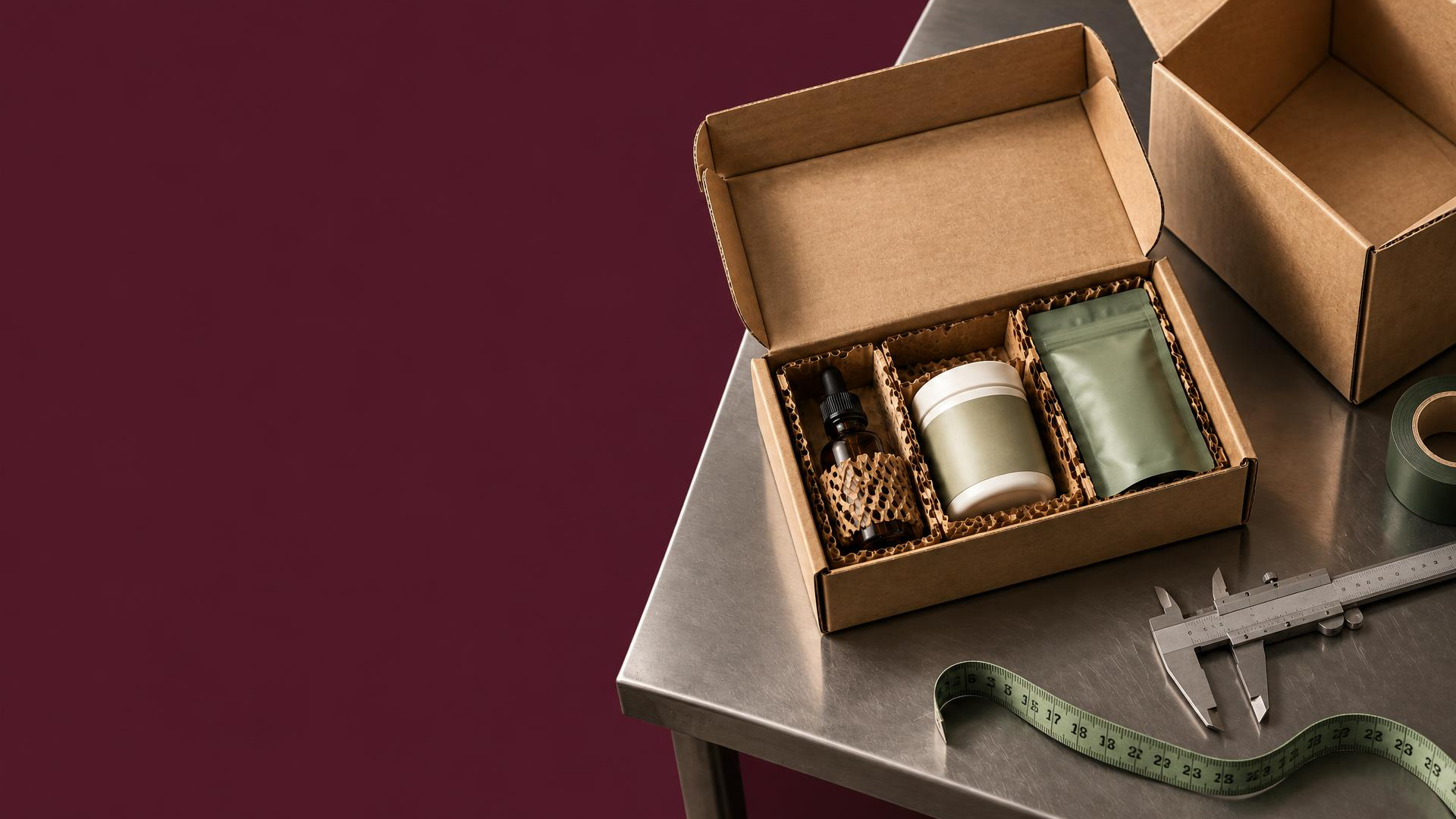
Dimensional weight pricing means oversized boxes cost money all year. Peak season multiplies that cost across every order. A short audit of your top SKUs and order combinations usually surfaces the worst offenders, and swapping box assignments is a change you can still make this season.
This guide walks through:
- Why box size matters more during peak season
- How to run a 30-minute packaging audit
- Why packaging supplies need to be confirmed before Q4 backorders
- How to protect glass, liquids and powders without oversizing
Why does box size matter more during peak season?
Dimensional (DIM) weight is a carrier's estimate of what a package should weigh based on its size: length × width × height divided by a divisor, typically 139 for UPS and FedEx daily rates, as described in the UPS daily rates and DIM weight guide. The carrier bills whichever is higher, actual weight or DIM weight, rounded up to the next pound. For lightweight beauty and supplement products, the box usually drives the bill.
Here's a before and after on a two-item order: a 1 oz glass serum and a 2 oz eye cream jar, about 0.9 lb packed. The numbers in the table below use the standard UPS daily-rate divisor of 139.
| Box detail | Before | After |
|---|---|---|
| Box size | 12 × 9 × 6 in | 8 × 5 × 3 in |
| Cubic inches | 648 | 120 |
| DIM weight (÷139) | 4.66 lb | 0.86 lb |
| Billable weight | 5 lb | 1 lb |
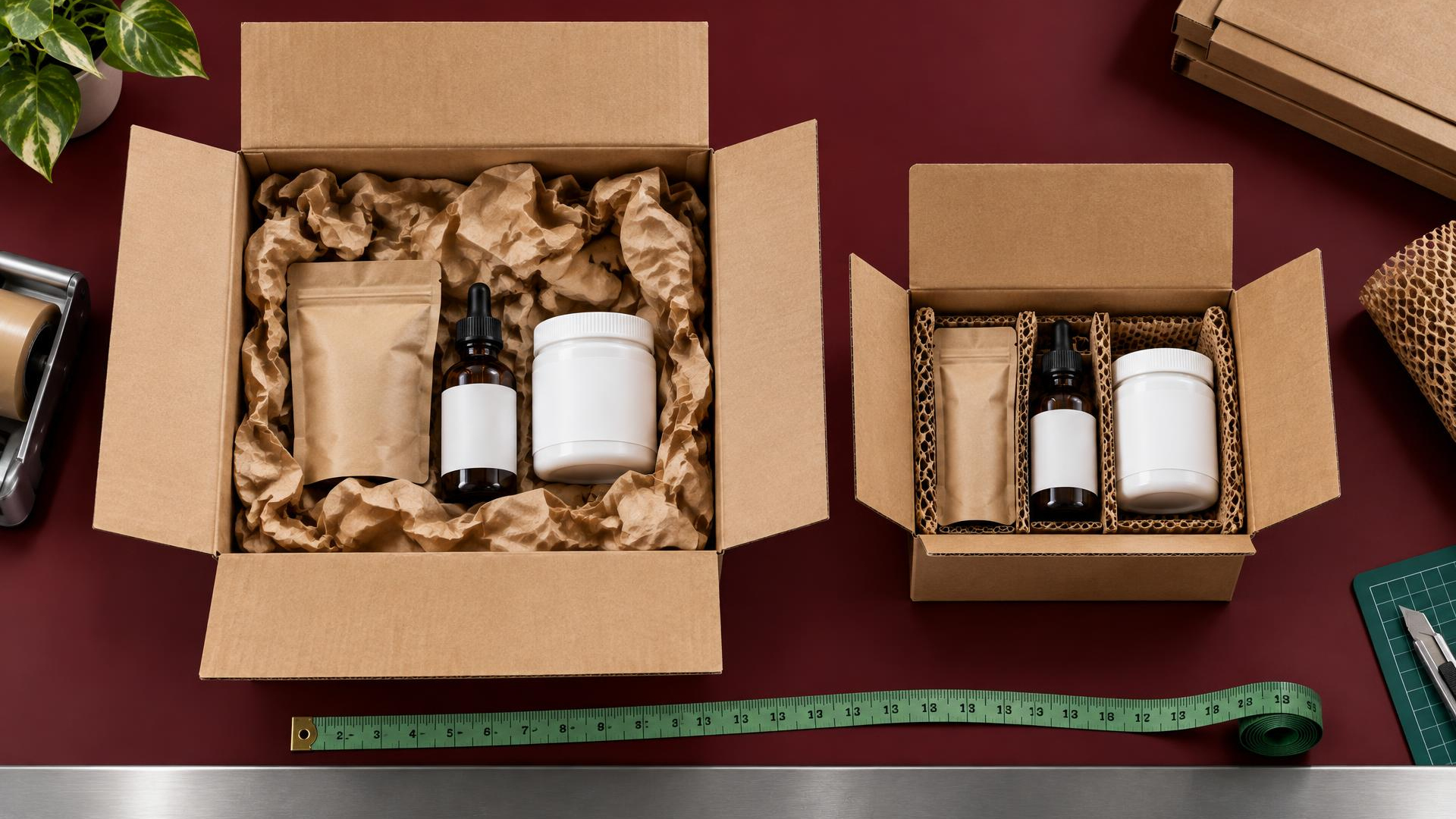
That's four billable pounds of air removed from one order. What it saves depends on your rate card. Many negotiated rates charge a flat minimum for every package up to several pounds, so this drop may not change the label at all. Right-sizing pays off most on heavier orders, on rates that climb with each pound and on carriers that price by volume.
Holiday demand surcharges stack on top. UPS, FedEx and USPS typically apply them from around the start of October through mid-January, with amounts that vary by ship date, zone and package weight. A smaller box keeps your base rate, and any weight-based portion of the surcharge, as low as possible.
USPS works differently, which catches a lot of brands off guard. For USPS Ground Advantage and Priority Mail, DIM pricing only applies to packages over one cubic foot (1,728 cubic inches), per the USPS Domestic Mail Manual cubic pricing section. Below that, cubic pricing tiers are still based on package volume. An oversized box can look fine on USPS and still price itself out of UPS and FedEx, which leaves rate shopping fewer options. Audit against every carrier in your mix.
The audit shows which of your orders are carrying those costs.
How do you run a 30-minute packaging audit?
Compare the box each high-volume order ships in against the smallest box that safely fits it. Most of the savings sit in a small number of orders. Six steps:
- Pull your top 10 SKUs by order volume from the last 60 to 90 days.
- Pull your top 10 order combinations, since bundles often get pushed into a "safe" larger box.
- List the box currently used for each, from your packing rules or a sample of shipping labels.
- Measure the product with its protective packaging and find the smallest box in stock that fits with appropriate cushioning.
- Calculate DIM weight for both boxes using each carrier's divisor.
- Flag every order where the smaller box lowers the label cost. Those are your priority swaps.
The most common finding is a default box. When a pack rule was never set, orders drift toward whatever size fits everything, and single-item orders end up in multi-item boxes.
Once you know which boxes you'll lean on, the next question is whether you'll have enough of them.
Why do packaging supplies need to be confirmed before Q4 backorders?
New box assignments only help if those boxes are on the shelf. Packaging lead times can stretch in Q4, and a backordered size sends packers to the next size up, which undoes the audit.
Confirm three things with your 3PL or warehouse team now:
- Current stock of each box and mailer size your top orders need.
- Reorder lead times from their packaging supplier through January.
- Fallback sizes if a primary box runs short, chosen ahead of time rather than at the pack station.
Extra inventory of your two or three highest-volume sizes is cheap insurance against packers reaching for the next size up. The smaller boxes still have to protect the product, though, and fragile SKUs are where brands hesitate most.
How do you pack glass, liquids and powders without oversizing?
Fragile products need protection that fits closely around them. Damage tends to come from movement and pressure points, and a large box with loose fill gives products more room to shift.
| Product type | Main risk | What tends to work |
|---|---|---|
| Glass bottles and jars | Breakage from impact and contact with other items | Molded pulp inserts, cardboard dividers, snug boxes |
| Liquids (serums, oils, toners) | Leaks from loose caps or pressure changes | Tightened caps, shrink bands or tape over closures, sealed poly bags |
| Powders (protein, collagen, pre-workout) | Seal failure and residue spreading to other items | Induction-sealed containers, bagging, separation from liquids |
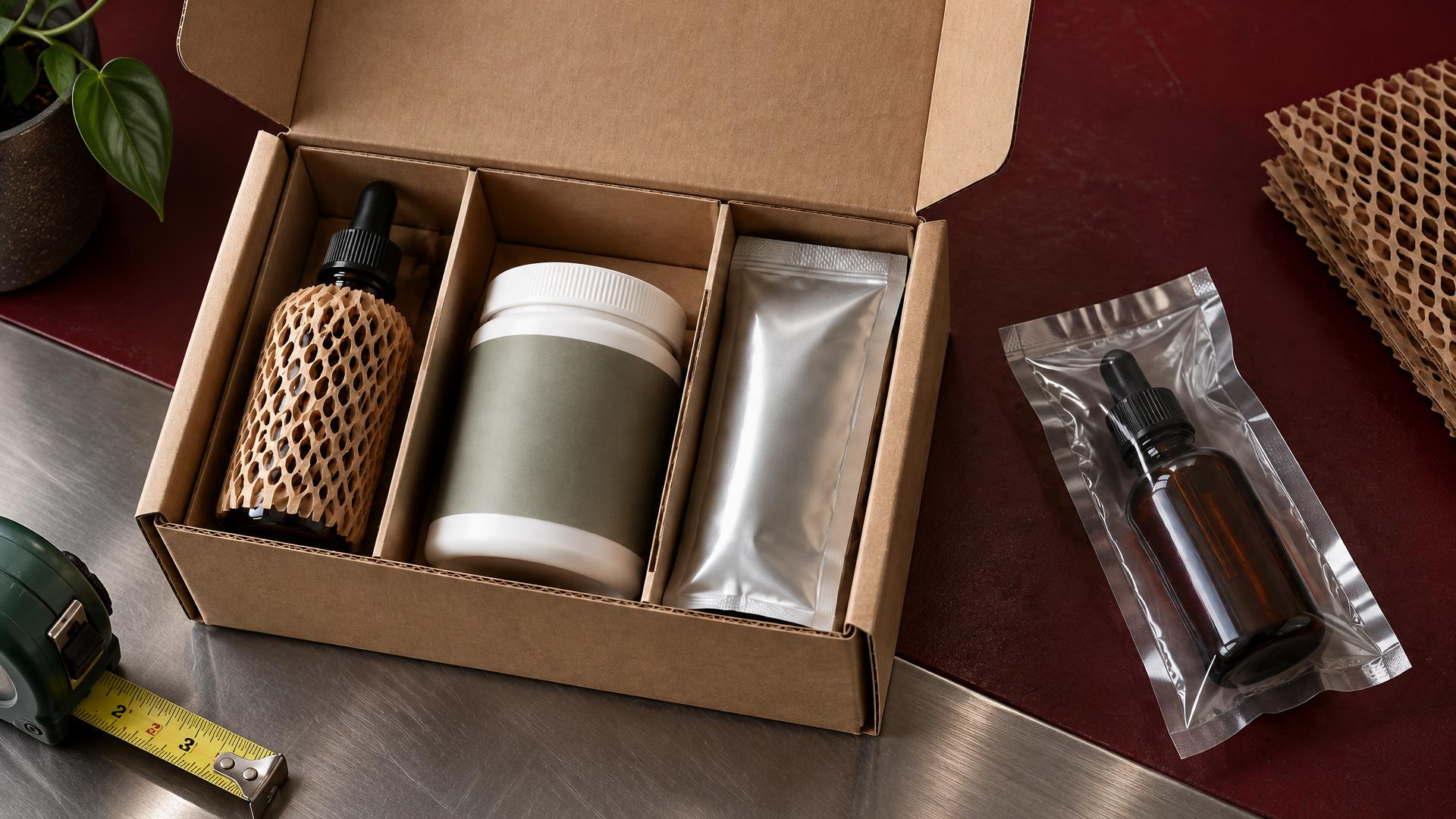
Two habits make the biggest difference: bag anything that can leak, even if it's sealed, and keep products from touching each other. For multi-item orders, a fitted insert usually protects better than extra fill in a larger box, though inserts take time to source.
Sustainable materials work at peak as long as they don't slow the pack line. Paper fill from a dispenser, molded pulp inserts and paper mailers for non-fragile items like balms and sachets all tend to work at speed. Right-sizing helps on its own: a smaller box uses less material and less fill.
Right-sized boxes are one of the few shipping costs you still control this close to peak
Most peak-season shipping costs are set by carriers. Box size is one you control, and empty space shows up on the invoice. This late in the year, the work splits into two lists:
| Fix now (November) | Plan for 2027 |
|---|---|
| Update pack rules for your top SKUs and combinations. | Redesign your box suite around your actual order profile. |
| Move single-item orders out of multi-item boxes. | Source custom inserts for fragile bundles. |
| Confirm stock of priority box sizes. | Test new sustainable materials for speed and damage rates. |
| Bag liquids and separate glass items. | Add packaging data to your quarterly shipping cost review. |
The hard part is consistency: the right box has to be assigned, stocked and used on every order, on the busiest days of the year. At Nice Fulfillment, real-time rate shopping compares carriers on every order, packaging customization lets us match boxes and inserts to your products, and 100% scan-based pack verification confirms each order is packed correctly before it ships. If you want a second set of eyes on your box assignments before volume peaks, request a packaging review and we'll walk through it with you.
More from the Q4 cluster
Pair this with the inventory management for 3PLs playbook, the BFCM order automation rules, and the holiday branded packaging guide. For supplier-list context, see our 2025 peak data for 2026 holiday fulfillment planning roundup.